
By Joseph Moss, International Banker
For much of the past decade, stablecoins sat firmly outside the traditional banking system’s perimeter. Regarded as instruments exclusively for the cryptocurrency ecosystem, they were mainly considered useful within digital-asset markets, but not sufficiently regulated for traditional banking. That stance has begun to soften, with some regions even enthusiastically embracing the technology. Although they are used more visibly for payments, settlements and liquidity management, they remain mired in regulatory uncertainty and prolonged conflicts between banks and crypto-native firms.
Pegged to fiat currencies such as the US dollar, stablecoins emerged in the mid-2010s as a solution to mitigate volatility within cryptocurrency markets. Given the speculative nature of the asset class, especially during those early years, banks and regulators alike viewed stablecoins as operationally opaque and also potentially destabilising should they grow beyond the crypto space. Highly publicised collapses of poorly designed stablecoins have only further exacerbated the traditional financial-services industry’s reticence towards their adoption.
During this time, banks faced mounting pressure to modernise their payment infrastructures, reduce settlement risks and respond to client demand for faster, cheaper transfers. Previously dismissed outright, stablecoins began to gain favour among financial institutions globally, such that by the early 2020s, they were used for cross-border payments and bank-to-bank settlements. As transaction volumes have grown rapidly in recent years, stablecoins have gained credibility among financial regulators, greatly enhancing their reputations.
According to figures from DeFi Llama, the circulating stablecoin supply now exceeds $300 billion, up by more than 40 percent from the supply a year ago. Market analyst projections forecast supply levels rising to $2-4 trillion by the end of the decade, underscoring the growth trajectory that could be unleashed if they were brought into mainstream usage. The traditional financial-services industry could end up being the most significant facilitator of this process.
In Europe, for example, stablecoins are set to “enter the mainstream” of the region’s financial system this year, according to S&P Global. “The digital tokens, which are often pegged one-to-one to currencies, promise greater stability than unbacked crypto assets yet retain many of the same benefits—speed, low costs, and traceability,” the US rating firm explained in a February 3 report. “That makes them a potentially useful instrument for both investment (via tokenised assets) and business transactions, especially across national borders.”
S&P Global has projected European stablecoin issuance and use to grow rapidly from this year onwards. “By 2030, we forecast the total value of euro-pegged stablecoins will be between €25 billion and €1,100 billion (equivalent to 0.1 percent to 4.2 percent of eurozone banks’ overnight deposits), up from a current level of about €650 million,” the report also noted. “The scale and speed of that change will have implications for the European financial system and deliver opportunities and challenges to incumbents, including banks, asset managers, payment platforms, and other financial services providers.”
In the United States, the GENIUS Act (Guiding and Establishing National Innovation for U.S. Stablecoins Act) has certainly played a pivotal role in calming some of the regulatory concerns that banks have long held about stablecoins. The law mandates that stablecoin issuers, including banks, back their assets one-for-one with high-quality liquid assets, such as US currency, insured bank deposits or Treasury securities with maturities of 93 days or less. Their official oversight will also rest with banking regulators such as the Office of the Comptroller of the Currency (OCC) and the Department of the Treasury (DOT).
While banks are no longer dismissing stablecoins outright, neither have they fully embraced them—at least not in the United States. Arguably, the most significant reason for this hesitancy is lenders’ concerns that stablecoins could erode their deposit bases by reducing low-cost deposit funding and increasing reliance on wholesale markets.
Adoption thus remains uneven and constrained. Most large banks are not issuing public, freely circulating stablecoins; rather, they continue to experiment with permissioned tokens for interbank settlement, liquidity management, cross-border corporate payments and collateral movement. While such tokens often resemble stablecoins in functionality, they are typically issued only to approved counterparties and settled within controlled networks. Banks have also mostly refrained from offering consumer stablecoin wallets or payment products that could blur the line between deposits and digital tokens.
This approach captures certain benefits of stablecoin technology while still crucially preserving regulatory clarity—the lack of which has been central to shaping bank behaviour thus far. The proposed Clarity Act (Digital Asset Market Clarity Act of 2025), however, represents a significant inflection point in this regard, with the bill’s initial wording aiming to define the regulatory responsibilities for stablecoin issuance, establish clear reserve and disclosure requirements, and delineate the roles of banking and market regulators.
However, banks are also working to ensure that any legislation prevents crypto firms from gaining access to core banking functions, especially as stablecoin adoption threatens to bypass correspondent-banking networks, reduce fee income from payments and weaken banks’ roles in cross-border finance. For the banking sector, the Clarity Act represents containment within a framework that should enable it to gauge external competitive threats accurately.
In turn, this is now fuelling a highly visible battle between traditional financial institutions and crypto-native companies over control of the future of digital payments. With banks operating under stringent capital, liquidity and compliance requirements, many argue that allowing less-regulated entities to issue value creates systemic risk and unfair competition.
Indeed, an analysis by Standard Chartered’s global head of digital assets research, Geoff Kendrick, warned that US-dollar stablecoins could trigger $500 billion in deposits to exit US banks by the end of 2028. “US banks…face a threat as payment networks and other core banking activities shift to stablecoins,” Kendrick stated in the research note. “We find that regional US banks are more exposed on this measure than diversified banks and investment banks, which are least exposed.”
Crypto firms argue that stablecoins boost efficiency and inclusion, but banks counter that payment systems require oversight, resilience and balance-sheet capacity that only regulated institutions can provide. “The bank lobbying groups and bank associations are out there trying to ban their competition,” Brian Armstrong, Coinbase’s chief executive officer, said at the recent World Economic Forum (WEF) in Davos, Switzerland. “I have zero tolerance for that. I think it’s un-American, and it harms consumers.”
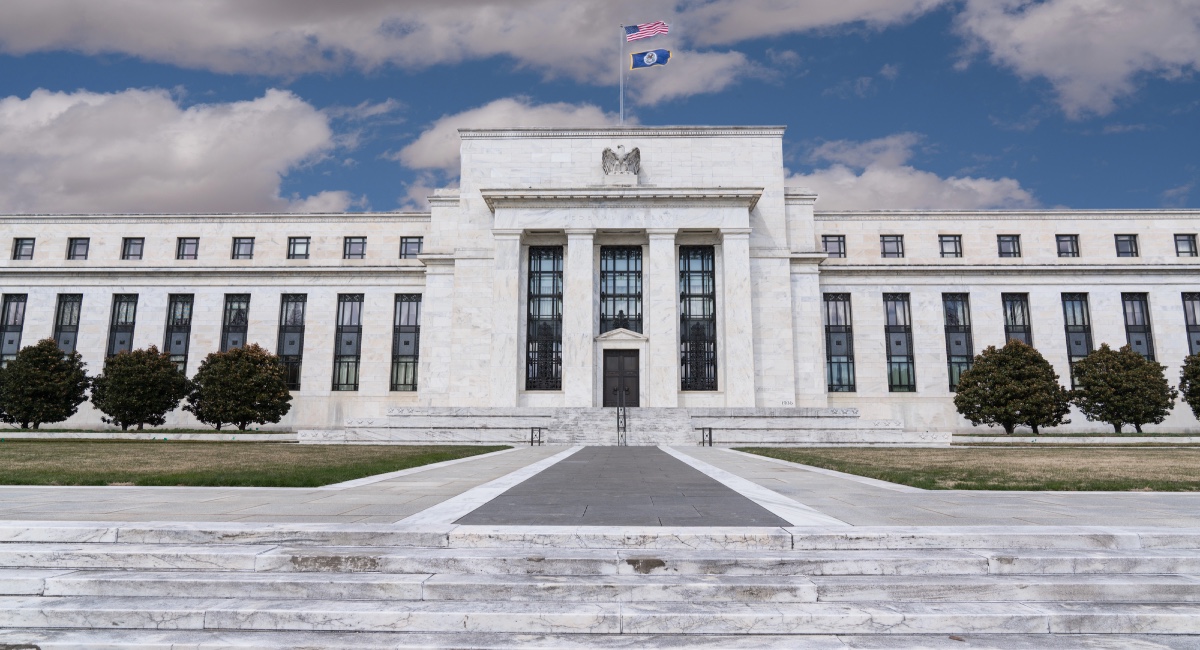
The Federal Reserve (the Fed), meanwhile, has noted both distinct challenges and opportunities for banks due to the rise of stablecoins. While their growth does not spell the end of the prevailing banking model, the Fed recently argued, it could expedite shifts in financial intermediation, including changes in deposit and funding costs, evolving patterns of credit provision and new dynamics in payment services.
“The ultimate trajectory will depend on how regulatory frameworks evolve, how effectively banks adapt, and whether stablecoins transition from niche speculative instruments to widely adopted payment and settlement tools,” a Fed paper published on December 17 contended, also recommending that banks move proactively, particularly those with “the scale, technological capacity, and regulatory expertise” to manage stablecoin participation to both offset potential disintermediation and develop new revenue streams and customer-engagement models.
“These could include issuing tokenised deposits, offering custodial and settlement services, or integrating programmable payment solutions into existing platforms. Smaller and less digitally advanced institutions, by contrast, may face more serious headwinds,” the research added. “Erosion of their deposit base and rising funding costs could weaken their lending capacity, particularly in markets where relationship banking has been central to local credit provision.”
That said, banks should be relieved in the meantime that the overall circulating stablecoin value remains a minor fraction of the total banking-deposit base. “Even if stablecoin supply were to reach Citigroup’s bullish scenario of $4 trillion by 2030, total supply would remain small compared with the more than $72 trillion in projected global commercial deposits (excluding China),” a recent analysis by Oliver Wyman acknowledged.
“But even if banks defend the lion’s share of their deposits, stablecoins could have a material impact on the cost of funds and payment fees,” the consulting firm also cautioned. “Beyond deposit substitution, the manner of adoption of stablecoins and adjacent technologies could have a profound effect on banking economics and the competitive landscape of the financial system.”