
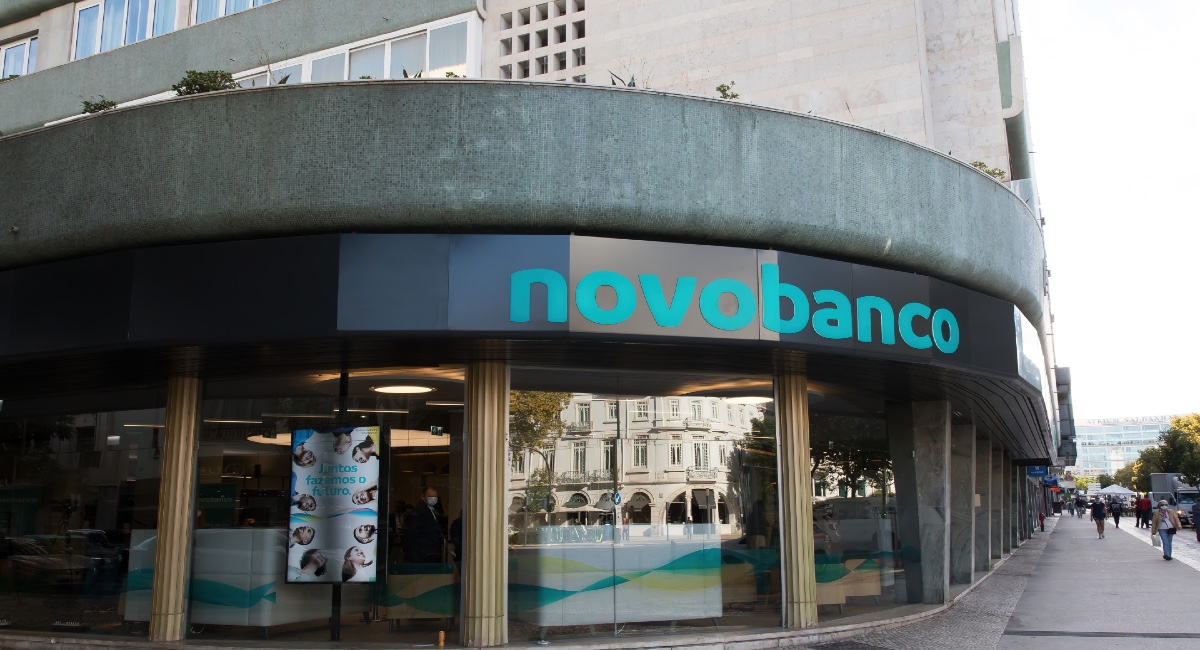
Novo Banco, SA, trading as novobanco, is the fourth-largest bank operating in the Portuguese market and conducts its main activity in the domestic banking sector in the corporate and retail segments, as well as in asset management.
As an efficient, customer-focused institution committed to sustainable growth in both retail and corporate banking, novobanco is one of Portugal’s leading banks, serving around 1.7 million clients by the fall of 2025 through a network of roughly 290 branches and 20 corporate centers nationwide. novobanco offers a broad spectrum of financial products and services to individuals, businesses and institutional clients.
In recent years, the bank has emphasized digital innovation to enhance its operations and customer experience. It follows a business model targeting two customer segments: individuals and corporations, proactively addressing and anticipating their needs. novobanco has also actively championed sustainability and responsible banking by investing significantly in eco-friendly commercial projects and environmentally focused financial products.
In June 2025, Groupe BPCE, a prominent French banking institution, agreed to acquire the bank for €6.4 billion. Anticipated to finalize in early 2026, this acquisition will bolster novobanco’s capital, enhance its operational capabilities and integrate it into a wider European banking network.
In an era during which sustainability has become a defining priority for financial institutions, novobanco actively promotes Portugal’s transition to a low-carbon economy. With its ambitious commitments, innovative products and strategic partnerships, the bank is embedding environmental, social and governance (ESG) principles into its core business model. We spoke with Patrícia Fonseca, chief compliance, legal and sustainability officer, to explore how novobanco is delivering on its ESG vision and shaping the future of sustainable finance.

Patrícia Fonseca, Chief Compliance, Legal and Sustainability Officer, novobanco
Ms. Fonseca, it’s certainly a pleasure to have you with us today….
novobanco committed €2 billion towards green investments between 2024 and 2026. What qualifies as “green”under your framework?
Our €2-billion commitment reflects a structured and rigorous approach to sustainable finance. Under novobanco’s framework, an investment is classified as “green” when it aligns with the European Union Taxonomy for Sustainable Activities, ensuring it is consistent with international standards and supports our clients’ energy transitions and journeys towards low-carbon business models. Eligible projects must contribute to climate-change mitigation or adaptation, demonstrate measurable improvements in energy efficiency or support renewable-energy generation or financing for companies operating in sectors that we believe have direct eligibility under our green framework (such as renewable-energy companies), which we call “the green corridor”.
We highlight financing for solar and wind energy projects, energy-efficient real-estate developments certified under recognized environmental standards and electric mobility solutions. We also prioritize sustainable-agriculture initiatives that promote resource efficiency and biodiversity preservation. By channeling capital into these sectors, novobanco aims to contribute to Portugal’s green transition while delivering tangible environmental benefits.
Our approach goes beyond compliance; it reflects a strategic commitment to integrate ESG into every facet of our operations. By doing so, we not only meet regulatory expectations but also create long-term value for clients, shareholders and society.
Does novobanco have a framework for green-bond issuance?
Yes, novobanco has established a Green Bond Framework that adheres to the International Capital Market Association (ICMA) Green Bond Principles (GBP) and the EU Taxonomy. This framework has been validated through an independent Second Party Opinion (SPO), ensuring transparency and credibility for investors.
The framework defines eligible categories for green financing, including renewable energy and sustainable buildings. It also outlines processes for project evaluation, fund allocation and impact reporting. By adopting these best practices, novobanco ensures that any future green-bond issuance meets the highest standards of environmental integrity.
This initiative positions novobanco as a proactive player in sustainable-capital markets, ready to leverage green bonds as a tool to finance projects that contribute to climate goals and the broader sustainability agenda.
novobanco signed the Science Based Targets initiative (SBTi) and obtained approval for sectoral commitments. How is this being implemented?
Securing SBTi approval in 2024 was a pivotal milestone for novobanco. It signifies our alignment with globally recognized climate science and our commitment to reducing greenhouse-gas (GHG) emissions in line with the Paris Agreement.
Implementation involves a dual approach. The first approach is portfolio alignment. We are progressively adjusting our credit portfolios to reflect sectoral decarbonization pathways. This includes setting measurable targets for emissions intensity in high-impact sectors, such as energy, real estate and industry. The second is client engagement. We actively support clients in their transition journeys by offering tailored financing solutions and advisory services.
Key actions include reinforcing ESG data collection (such as GHG emissions and energy performance certificates), understanding clients’ transition plans and promoting green financing through innovative products and partnerships. Additionally, we invest in ESG-literacy initiatives to ensure stakeholders are equipped to navigate the complexities of sustainability regulation.
Our focus remains on sectors with the highest carbon footprints and credit exposures, where our influence can drive meaningful change.
You helped develop the SIBS ESG platform for small and medium-sized enterprises (SMEs). What do corporate clients need to report ESG performance accurately?
Accurate ESG reporting requires structured data across three dimensions: environmental, social and governance. SMEs must disclose metrics such as carbon footprint, energy consumption, workforce diversity and governance policies.
The SIBS ESG platform, developed in collaboration with the Portuguese banking ecosystem, simplifies this process by providing standardized questionnaires, free carbon-footprint calculators and ESG-maturity self-assessments. This innovative, centralized system allows SMEs to submit ESG data once per year to all participating banks, reducing administrative burdens and ensuring consistency.
For novobanco, this platform enhances transparency and facilitates credit-risk analysis, while for SMEs, it offers a practical, cost-free solution to meet growing sustainability requirements and avoid the burden of providing this information to multiple financial institutions. By promoting data standardization, we strengthen the foundation for responsible lending and regulatory compliance across the financial sector.
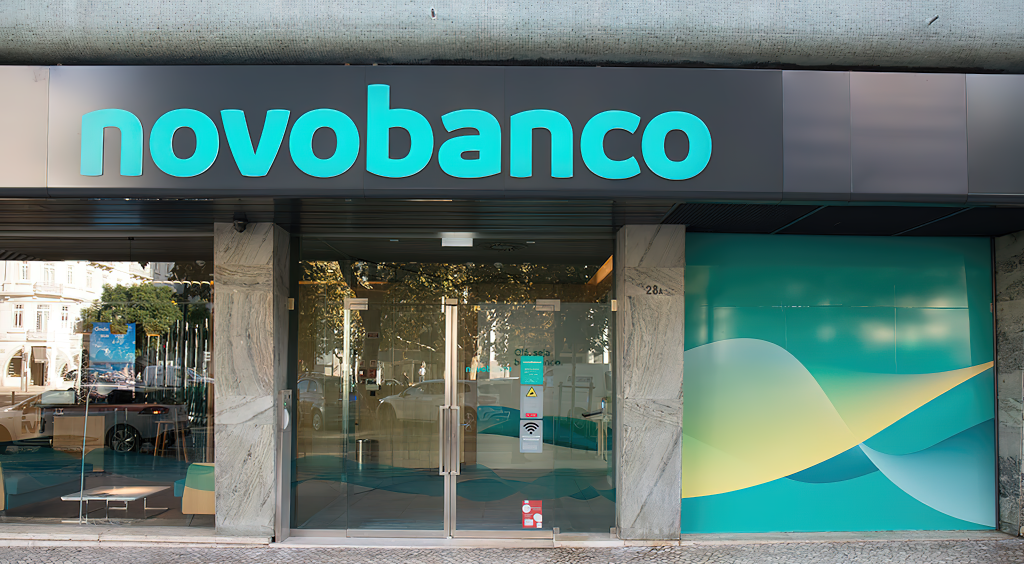
One of novobanco’s branches in Lisbon, Portugal
How is novobanco helping corporate clients demonstrate ESG alignment to stakeholders?
novobanco adopts a comprehensive approach to supporting corporate clients in their ESG journeys. We offer sustainable-finance products, including green loans, transition financing and sustainability-linked instruments that incorporate pricing incentives tied to ESG performance.
Beyond financing, we provide advisory services to help clients structure transition-related opportunities and leverage national and regional ESG programs. This is also ensured through the active collaboration between our ESG expertise team and the commercial teams. Our partnerships with specialized firms deliver expertise and innovative solutions, enabling clients to accelerate compliance and achieve sustainability goals.
We also promote the SIBS ESG platform, which standardizes ESG reporting and enhances transparency. By facilitating accurate and consistent disclosure, we empower clients to communicate their ESG commitments effectively to investors, regulators and other stakeholders.
How has novobanco managed to achieve more than a 50-percent reduction in Scope 1 and 2 emissions since 2021?
This achievement reflects a deliberate and systematic approach to operational sustainability. Measures include transitioning to certified green electricity, installing solar panels in new premises and implementing energy-efficiency upgrades across facilities. In June 2024, novobanco moved its headquarters to new premises—novobanco campus—with major energy and efficiency improvements, including solar panels for self-consumption, extensive electric-vehicle charging infrastructure and sustainable building design to reduce emissions.
We have also modernized our vehicle fleet by increasing the proportion of electric and hybrid vehicles and have introduced monthly monitoring of key emission indicators to ensure continuous improvement. These actions underscore our commitment to reducing our environmental footprint and setting an example for the industry.
What is the ESG Steering, and how does it monitor carbon-reduction commitments?
The ESG Steering is a cornerstone of novobanco’s governance model for sustainability. Its mandate includes integrating ESG principles into strategic decision-making, overseeing risk-management frameworks and ensuring compliance with regulatory requirements; at the same time, it provides a forum for ESG-related discussions and sharing of knowledge and experience.
Monitoring carbon-reduction commitments involves a combination of data-driven tools, portfolio-risk assessments and governance oversight. The steering reviews progress toward SBTi-aligned targets, identifying gaps and implementing corrective measures where necessary. This structured approach ensures accountability and reinforces our commitment to achieving climate objectives.
Recently, novobanco partnered with the European Investment Bank (EIB) to channel €300 million into small and medium-sized enterprises and green projects. How do these facilities work, and what makes agriculture “sustainable”?
Our partnership with the EIB exemplifies our role as a catalyst for sustainable development. These facilities typically include sustainability-linked components, where loan terms may be tied to ESG performance indicators. This incentivizes borrowers to adopt practices that reduce environmental impacts. Funds are directed toward renewable energy, smart transportation, sustainable agriculture, energy efficiency and CO2-emissions reduction.
We engage with our clients to ensure they know we are committed to supporting them in these projects, while also promoting the EIB’s “Green Checker Tool” within our commercial network—a tool that enables commercial managers to assess investments and verify whether they can be classified as green by the EIB.

On the governance side, in what specific ways does novobanco embed environmental, social and governance considerations into its credit-risk policies and product design? And how exactly does a “green credit line” work in practice?
SMEs today face a complex and evolving environment. On the one hand, traditional credit-risk pressures persist—driven by rising interest rates, inflation and raw-material costs. On the other hand, broader uncertainties such as supply-chain disruptions and geopolitical tensions continue to impact trade flows and energy prices. Compounding these are structural risks, such as the climate transition, which may require businesses to adapt more rapidly than anticipated.
In response, our internal credit-risk assessments now integrate sustainability dimensions, including transition, environmental, physical and social risks. In Portugal, for example, physical risks such as forest fires, heatwaves and droughts are becoming increasingly severe. The bank is actively investing in identifying and mitigating these risks within its portfolio—most notably by finetuning its geospatial risk-mapping capabilities. We have also increasingly developed benchmarking tools to compare progress in emissions reduction and energy consumption across industrial sectors.
We take all these risks seriously, and our risk-management framework is designed to identify, measure and mitigate them early on. This includes rigorous credit assessments, sectoral stress testing and closer monitoring of vulnerable industries. We are confident in our ability to manage these challenges by partnering with our SME clients to strengthen their resilience and ensure sustainable growth.
What key online advisory tools does the bank offer SMEs to help them gain insights into their financing options? What are “digital dashboards”, and how do they help SMEs track their cashflows in real-time?
At novobanco, we focus on providing SMEs with digital tools that strengthen financial visibility and support better-informed decisions. Our online factoring solution is one of the most impactful: It allows companies to monitor invoice discounting in real-time, understand the status of each operation and add suppliers directly through the platform, ensuring more predictable liquidity management and faster reactions to market pressures.
We also offer a comprehensive confirming platform, including the innovative Confirming ESG, which enables differentiation of suppliers that meet ESG criteria, helping SMEs embed sustainability into their procurement processes while strengthening supply-chain resilience and alignment with stakeholder expectations.
Across these products, our digital dashboards provide a unified, real-time view of cashflows, financing usage, upcoming payments and liquidity. Combined with our trade-finance expertise, which supports companies navigating global instability and capturing new market opportunities, these tools give SMEs the clarity, control and guidance they need to operate safely and competitively in today’s financial environment.
Do you have any closing thoughts on novobanco’s ESG vision?
Sustainability is not merely a strategic priority—it is a fundamental responsibility. novobanco is committed to embedding ESG principles into its business model, driving systemic change across sectors and contributing to Portugal’s climate objectives. Through targeted investments, robust governance and a clear commitment to support our clients’ transition journeys, we aim to create long-term value for society while safeguarding the environment for future generations.
novobanco is certainly on track to do just that. Ms. Fonseca, thank you again for sharing the bank’s latest achievements, especially in sustainable finance.