
 By Mohamed Daoud, Director, Industry Practice Lead, Financial Crime and Third-Party Risk Compliance Middle East & South Asia, Moody’s
In the conference room of a prominent bank in the Middle East, the situation is tense. The bank’s leaders have just been told that its primary US-dollar correspondent relationship with a major US bank is under review due to “compliance concerns”. The stakes could not be higher—without this relationship, the Middle Eastern bank’s ability to facilitate international trade in dollars would collapse overnight, and the risk of closure would be high.
This scene, playing out with increasing frequency at banks across the region, illustrates the effects of what experts increasingly call the “weaponization” of the US dollar in driving global anti-money laundering and counter-terrorism financing (AML/CTF) standards.
Currency as jurisdiction: Beyond the Westphalian model
A common view of regulatory authority is that governance is tied to physical territory, with laws applying within defined geographic boundaries. However, the global financial system has evolved beyond this Westphalian model into one whereby currencies themselves create jurisdictional spheres that follow money regardless of where it flows.
In the interconnected world of international finance, emerging markets (EMs) exist within an intricate web of regulatory influences that transcend traditional national boundaries. While institutions such as the International Monetary Fund (IMF) and World Bank receive significant attention, a more subtle yet powerful force shapes financial systems across developing regions: the regulatory authority embedded in the major global currencies.
The dollar’s dominance and its regulatory implications
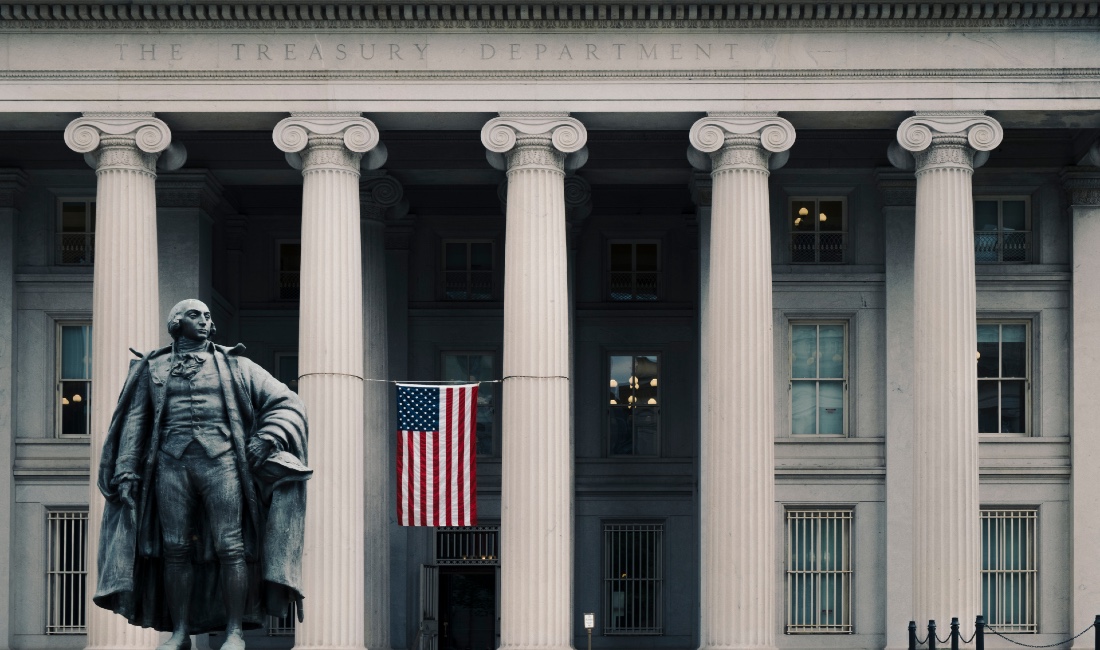
The US dollar’s preeminence in global trade and finance vastly amplifies this regulatory influence. Approximately 90 percent of foreign-exchange transactions involve the dollar, and data from the International Monetary Fund show that the US dollar accounts for 57.8 percent of the IMF’s Currency Composition of Official Foreign Exchange Reserves (COFER). This gives US regulatory expectations an outsized influence on global compliance standards, effectively becoming global standards by default. US authorities such as the Office of Foreign Assets Control (OFAC), the United States Federal Reserve System and the U.S. Department of the Treasury wield influence that extends to virtually every corner of the global financial system.
When financial institutions and other corporations in Dubai, Mumbai, Istanbul, Nairobi or elsewhere conduct transactions in US dollars, they effectively step into the US regulatory space, subjecting themselves to complex requirements, from sanctions compliance to AML (anti-money laundering) protocols. This currency-based jurisdiction extends the regulatory reach of major economies far beyond their borders, creating a form of financial extraterritoriality.
The US dollar’s journey from mere currency to compliance enforcement accelerated dramatically after the September 11 attacks in 2001, when financial regulation became intertwined with US national-security objectives. This approach also applies to other major currencies, such as the euro (the second most-traded currency), followed by the Japanese yen, British pound sterling and others such as the Australian dollar, Canadian dollar and Swiss franc.
Most global trade transactions are denominated in US dollars, creating an inescapable dependency on the currency worldwide. For emerging markets, where local currencies often lack international credibility, this dependency is particularly acute.
Cascading compliance and systemic asymmetries
The transnational nature of currency regulation creates cascading compliance chains that reach deep into emerging markets. Major global banks, subject to strict oversight in their home jurisdictions, impose similar requirements on their correspondent-banking partners in the Middle East and elsewhere. Middle Eastern financial institutions, in turn, pass compliance obligations on to smaller domestic banks in Africa and other territories.
A midsized bank in Oman, Bahrain or Egypt may need to maintain compliance systems of comparable sophistication to those of global banking giants but without the economies of scale or specialized expertise readily available in developed markets. This asymmetry is particularly acute for institutions in smaller emerging economies, for which compliance costs can be a significantly higher percentage of operational expenses than those of counterparts in developed markets.
The de-risking phenomenon and regional economic impacts
Perhaps the most serious effects of transnational regulatory dynamics are felt when US banks terminate correspondent relationships with local banks in emerging markets due to perceived AML deficiencies, a process known as “de-risking”. The consequences ripple through entire Middle Eastern economies. As documented by the World Bank and the IMF, since 2011, thousands of correspondent-banking relationships have been severed—particularly affecting institutions in emerging markets perceived as high-risk—in the Middle East, South Asia, Africa, Central Asia and the Caribbean, among others.
De-risking has cascaded from more developed markets to less developed ones. For example, prominent banks in the Middle East have cut ties with many African and South Asian banks deemed to lack compliance maturity, while simultaneously complaining about similar treatment from Western banks. This withdrawal of financial services creates a paradoxical outcome: Efforts to strengthen the integrity of the global financial system through enhanced regulation inadvertently push legitimate transactions into less transparent and controlled channels, such as the “hawala” system. Hawala operates outside traditional banking and remittance channels to transfer funds and is based on trust and honor among a network of informal brokers.
De-risking’s impact on the corporate sector
The de-risking phenomenon has significantly impacted the corporate sector as local banks have closed the accounts of hundreds of thousands of small and medium-sized enterprises (SMEs) in the Middle East and other emerging economies. This often occurs when banks ask questions about the entities’ and their related businesses’ compliance with AML/CTF, know your customer (KYC), know your business (KYB) and know your supplier (KYS) requirements. In many cases, businesses that have had their accounts closed (or never opened) failed to respond to the KYC/KYB questionnaires, as they were reluctant to share required information, unaware of applicable regulations or unfamiliar with the compliance processes necessary to open or maintain bank accounts. Most corporations wrongly believe that these rules apply solely to banks and the financial sector. The lack of awareness and training in the corporate sector is a problem. Regulatory training is mandatory in banking and finance but not for other corporates—except recently for designated non-financial businesses and professions (DNFBPs), where limited enforcement has begun.
Corporate cross-border USD transaction and compliance risks
In emerging markets, including the Middle East, executives often don’t fully comprehend the profound, multifaceted nature of compliance with regulations to combat financial crime, including those inherent in using the US dollar for cross-border transactions, particularly in the context of imports and exports. This shortcoming can expose their organizations to significant and potentially catastrophic repercussions stemming from the unilateral application of US sanctions.
Any company performing a US dollar-denominated transaction with a US-sanctioned third party, including suppliers, buyers, intermediaries or even logistical service providers, faces a substantial probability of also being designated as sanctioned parties and added to the US sanctions list.
In the case of the US OFAC list, such a designation can trigger a rapid and devastating chain of events. US correspondent banks, which facilitate the majority of international US-dollar transfers, are obliged to inform their foreign banking partners immediately about any newly sanctioned entities. These US banks will invariably expect their foreign counterpart banks to cease all banking activities with the sanctioned parties and, critically, to close all associated accounts, regardless of currency denomination. This demand often extends to accounts held in the local currency of the foreign bank’s jurisdiction, potentially creating direct conflicts with local legislation that frequently prohibits or does not mandate such closures for national entities or individuals. Many executives fail to fully appreciate the potential speed and severity of action against breaches until their organizations become ensnared, which can lead to severe operational disruptions, financial losses and business closures.
To manage the significant and frequently underestimated risks in international trade, entities must implement a comprehensive strategy with advanced KYC/KYB/KYS frameworks and tools. This requires sophisticated sanctions screening and enhanced due diligence (EDD) solutions to verify entities and carry out corporate background checks that go beyond basic name matching. These tools should incorporate detailed risk-assessment methodologies that can identify potential exposures by examining compliance databases for corporate information, including ownership structures, geographic operations and possible connections to sanctioned entities or red-flagged groups in high-risk jurisdictions.
Corporate-sector sanctions: Case studies of currency power
Historically, the U.S. Treasury’s sanctions have focused on the banking and financial sectors. Since Russia’s invasion of Crimea in 2014 (and even more since the start of Russia’s war on Ukraine in 2022), the US has nuanced its approach with sectoral sanctions, focusing more on corporate sectors; hundreds of companies have been directly sanctioned over the last few years. As an example, in 2024, nearly 400 entities and individuals were sanctioned by the U.S. Department of State for allegedly supporting Russia’s military-industrial base, including in Asia, South Asia and the Middle East.
Financial-sector sanctions: BNP Paribas—the $9-billion lesson
In 2014, French banking giant BNP Paribas pleaded guilty to violating US sanctions and processing billions in US-dollar transactions to Iran, Sudan and Cuba through the US financial system. As punishment, BNP Paribas agreed to pay almost $9 billion in penalties to US authorities, the largest sanctions-violation fine in history at that time. This landmark case demonstrated US authorities’ willingness to aggressively penalize violations by foreign banks that wished to maintain access to the critical US-dollar system, establishing a powerful precedent for extraterritorial financial enforcement.
The US enforcement action against BNP Paribas made bank executives more aware of AML/CTF regulations than a decade of regulatory training. Banks throughout emerging markets started elevating compliance managers to C-suite positions and allocating unprecedented resources to compliance, including high-end technology and red-flag corporate information subscriptions.
Regional transformation in Africa, the Middle East and South Asia
African, Middle Eastern and South Asian banks invested hundreds of millions in compliance systems and personnel between 2010 and 2020, despite the regions’ limited resources, as they faced increased scrutiny from correspondent banks in the United States, the United Kingdom and Europe. When some banks lost their last US-dollar correspondent relationships, they effectively ceased to exist as international financial entities overnight. This demonstrated the existential threat of US-dollar exclusion and sent shockwaves through financial institutions across the developing world, driving rapid reforms that might otherwise have taken decades.
While artificial intelligence (AI)-powered systems linked to subscribed databases can make transaction monitoring, sanctions screening and entity verification easier, new challenges and opportunities are emerging as cryptocurrencies and alternative payment systems advance. As regulators scramble to regulate these systems, financial institutions in developing economies are trying to navigate the rapidly evolving landscape with limited regulatory guidance, often caught between the imperative for innovation and the need for compliance and caution.
Seeking alternatives
While maintaining technical regulatory independence, nations find their financial sectors increasingly shaped by external forces tied to dominant global currencies. This creates complex compliance dynamics between national authorities, local financial institutions and international regulatory bodies, creating multi-dimensional rules for compliance and combating financial crime.
The US dollar’s enforcement power has prompted some countries to explore alternatives. Regional payment mechanisms in the Middle East and South Asia aim to reduce dollar dependency in intra-regional trade. Several central banks in the Middle East have been experimenting with cryptocurrency settlements between two countries using new blockchain-based regional payment systems. However, the dollar’s dominance in global commerce means that these alternatives remain supplementary rather than transformative.
Toward a new equilibrium
The future of transnational regulatory dynamics in emerging markets points toward a new equilibrium that balances the legitimate need for global standards with the recognition of local implementation realities. This evolution will likely include more graduated compliance expectations that acknowledge the varying capacities of different financial systems, increased AI assistance and solutions to build compliance capabilities in emerging markets, alongside more inclusive processes to integrate international standards.
Success in this environment requires an understanding of the entire compliance ecosystem of transnational governance mechanisms, not just local requirements. For emerging-market financial institutions, mastering these requirements represents both an existential challenge and a strategic opportunity—a chance to build distinctive capabilities and deploy new AI solutions that bridge local markets with the global financial system in ways that create value while managing the complex compliance demands of our interconnected world.
Additional Sources
International Finance Corporation (IFC): “De-Risking and Other Challenges in the Emerging Market Financial Sector: Findings from IFC’s Survey on Correspondent Banking,” September 1, 2017.
International Monetary Fund (IMF): “Recent Trends in Correspondent Banking Relationships: Further Considerations,” April 21, 2017.